
Ask any Sydney office manager or business owner about commercial cleaning, and chances are you’ll hear the same frustrations repeated. From missed areas to inconsistent standards, cleaning complaints can quietly undermine staff morale, workplace hygiene and even a company’s professional image. The good news? Most of these issues are avoidable with the right approach and expectations.
Here are the most common commercial cleaning complaints Sydney businesses raise – and practical ways to prevent them.
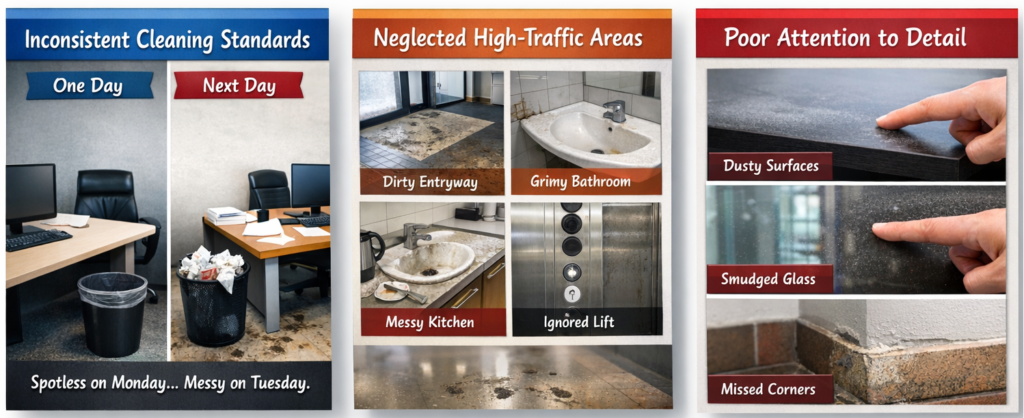
1. “The cleaning is inconsistent”
One of the biggest frustrations is walking into a spotless office one morning, only to find overflowing bins or dusty desks the next. In Sydney’s fast-paced commercial environment, inconsistency often stems from staff changes, rushed schedules or unclear task lists.
How to avoid it:
Consistency improves when cleaning tasks are clearly documented and regularly reviewed. A structured checklist tailored to your workspace – whether it’s a CBD office, a warehouse in the west or a retail space in the inner suburbs – ensures nothing is left to memory. Regular quality checks also help maintain standards over time.
2. “High-traffic areas get neglected”
Entrances, lifts, kitchens and bathrooms take the most punishment, especially in busy Sydney workplaces where foot traffic is constant. Yet these are often the very areas that staff and visitors notice first when standards slip.
How to avoid it:
Cleaning schedules should reflect how a space is actually used, not just what’s on paper. High-traffic zones need more frequent attention, particularly during winter flu season or after wet weather when dirt is tracked indoors. Adjusting routines seasonally makes a noticeable difference.
3. “The cleaners don’t understand our business”
A law firm, medical practice and construction office all have very different cleaning needs, yet many businesses feel they’re getting a one-size-fits-all service. This mismatch often leads to overlooked details or unnecessary work in low-priority areas.
How to avoid it:
Clear communication is essential from the start. Outlining operational hours, sensitive areas, security protocols and compliance requirements allows cleaning teams to work smarter, not harder. Periodic walk-throughs help realign expectations as your business evolves.
4. “There’s poor attention to detail”
Dusty skirting boards, smudged glass, sticky kitchen benches – these small oversights add up. In Sydney’s competitive business landscape, minor cleanliness issues can quietly damage a company’s professional image.
How to avoid it:
Detail work often gets missed when timeframes are too tight. Allowing adequate time for each clean, rather than compressing tasks into unrealistic windows, leads to better outcomes. Rotating deep-clean tasks also ensures less obvious areas aren’t forgotten.
5. “Communication is difficult”
Many Sydney businesses report frustration when issues are raised but not addressed, or when feedback seems to disappear into a void. Without clear communication channels, small problems can quickly become ongoing complaints.
How to avoid it:
Establishing a single point of contact and a simple feedback process makes a significant difference. Whether it’s a quick follow-up email or a scheduled check-in, regular communication builds accountability and trust on both sides.
6. “Cleaning disrupts our workday”
In flexible and hybrid workplaces, poorly timed cleaning can interrupt meetings, phone calls or client visits. This is especially common in offices with extended trading hours or shared spaces.
How to avoid it:
Cleaning schedules should align with how your workplace actually operates. Early mornings, evenings or staggered cleaning routines can minimise disruption while still maintaining high hygiene standards.
Turning complaints into improvements
Most commercial cleaning issues aren’t about effort – they’re about alignment. When expectations, schedules and communication are clear, complaints drop and workplace satisfaction improves. For Sydney businesses juggling busy teams, compliance requirements and high public expectations, proactive cleaning management isn’t a luxury – it’s part of running a professional operation.
A clean workplace should support productivity, not create friction. Addressing common complaints early ensures your cleaning service works quietly in the background, exactly as it should.
